カリーナ星雲(NGC 3372)The Carina Nebula (NGC 3372)
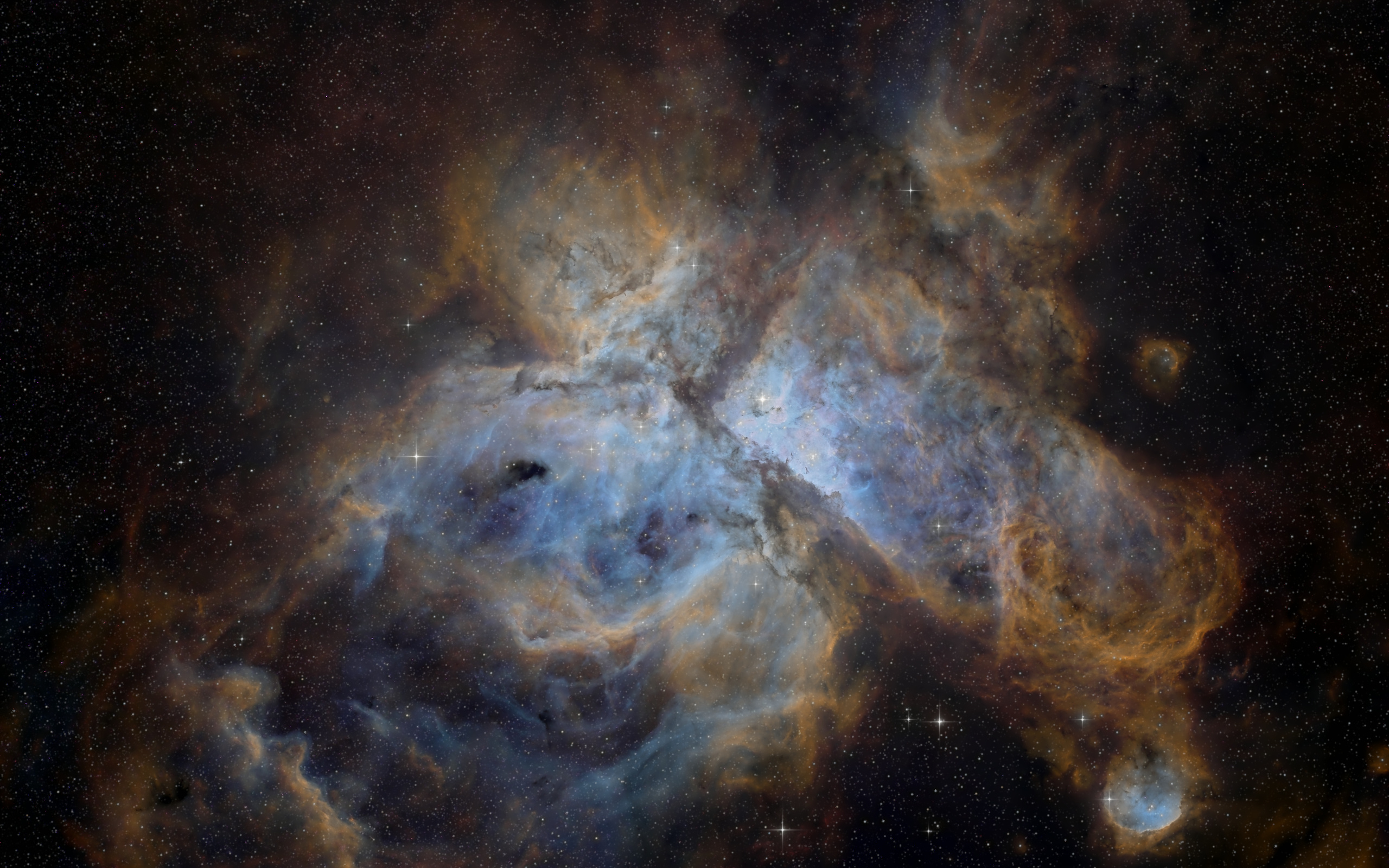
撮影・画像処理・著作権:Stefano Ivan Stinga(リモート望遠鏡:タカハシ FSQ-106ED、ナミビア)Image & Copyright: Stefano Ivan Stinga (remote telescope: Takahashi FSQ-106ED, Namibia)
ダウンロードDownloads
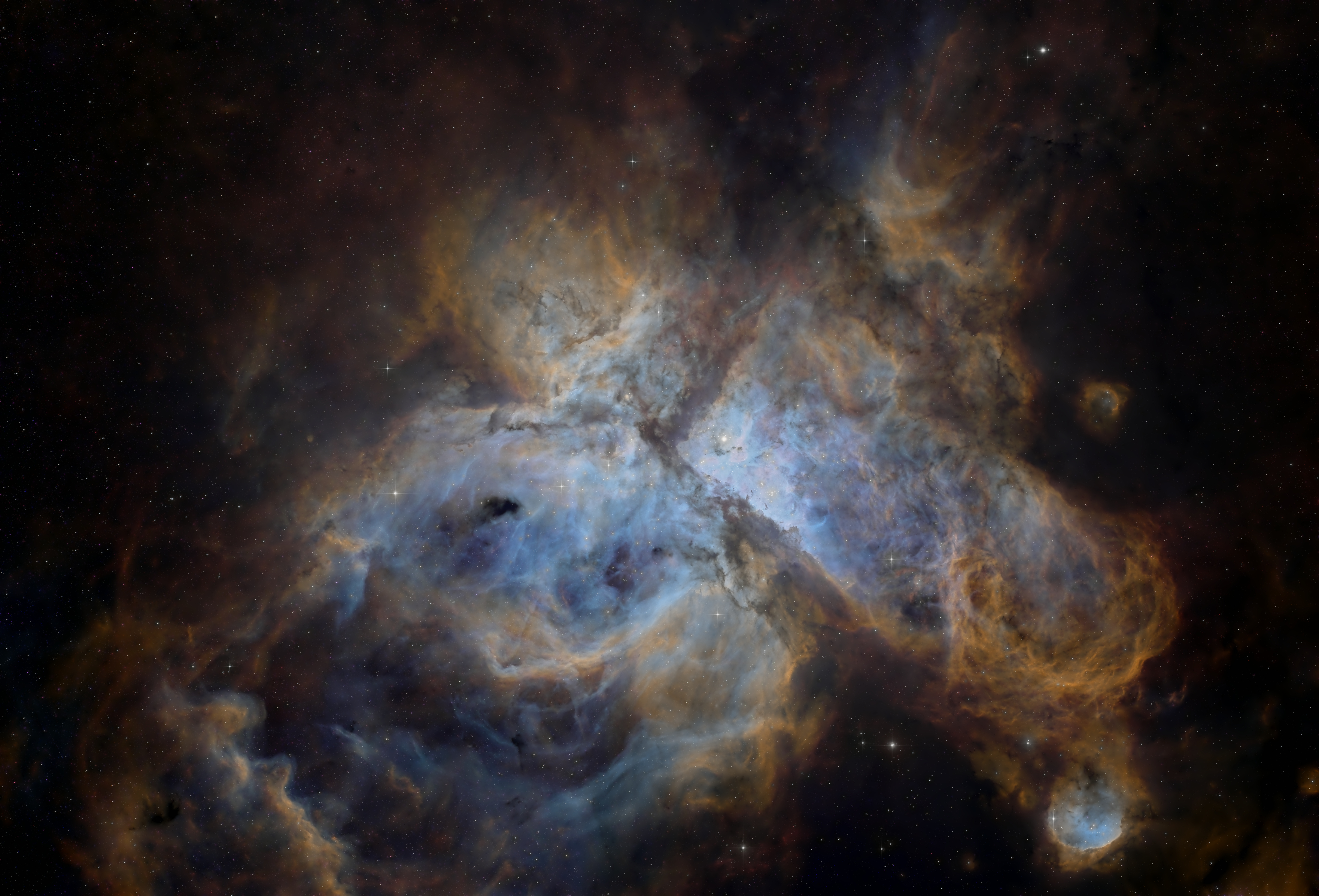
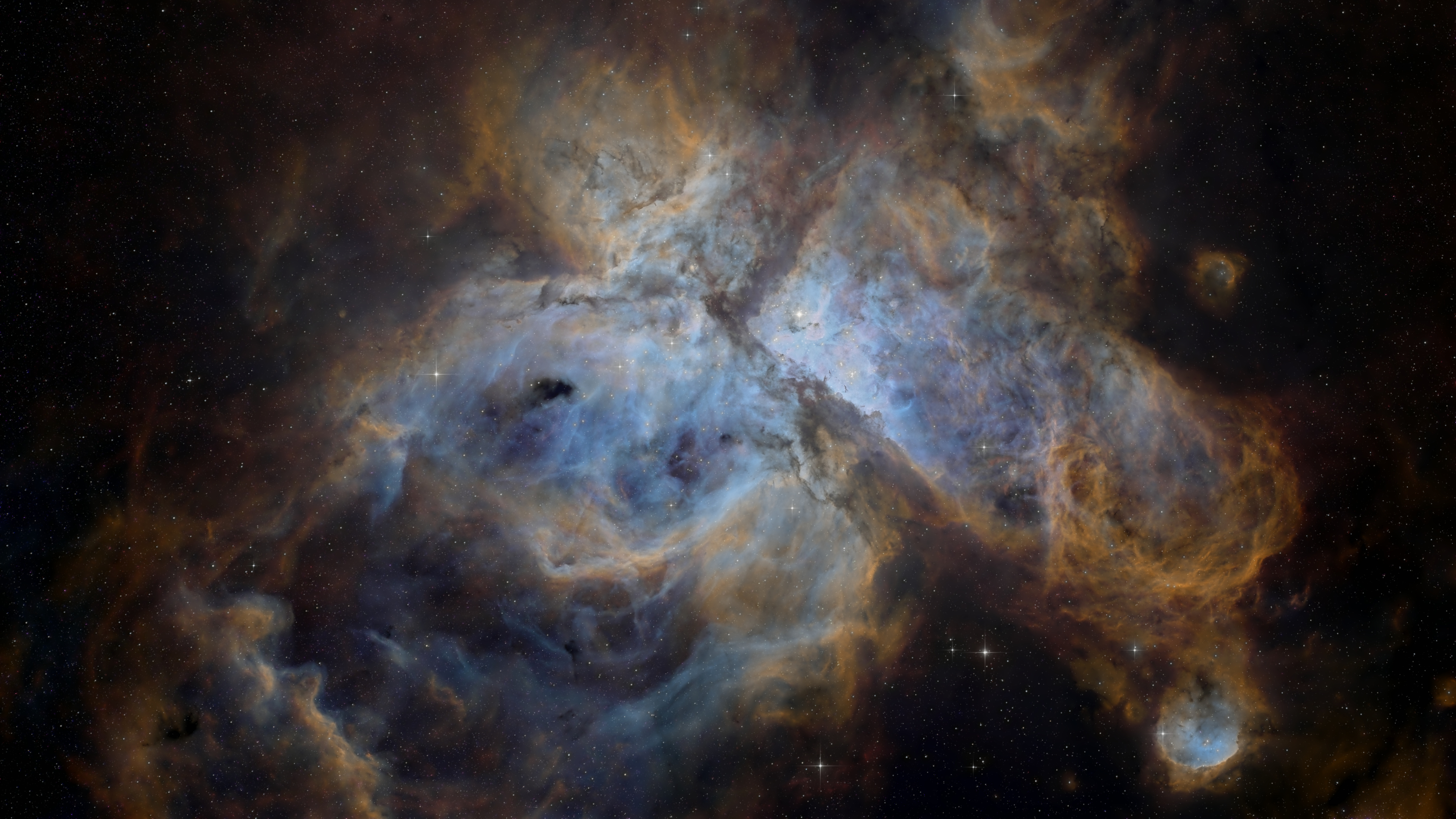
明るい星の十字の光(回折スパイク)は画像処理で描き加えたものです。撮影に使った屈折望遠鏡ではスパイクは生じません。スパイクのない版と16ビットTIFFは、ご要望に応じてお送りします。(X @Sting1_JP)The four-pointed diffraction spikes on the brightest stars are added in processing; the refractor used makes none. Versions without spikes and a 16-bit TIFF are available on request: X @Sting1_JP
拡大画像Close-ups
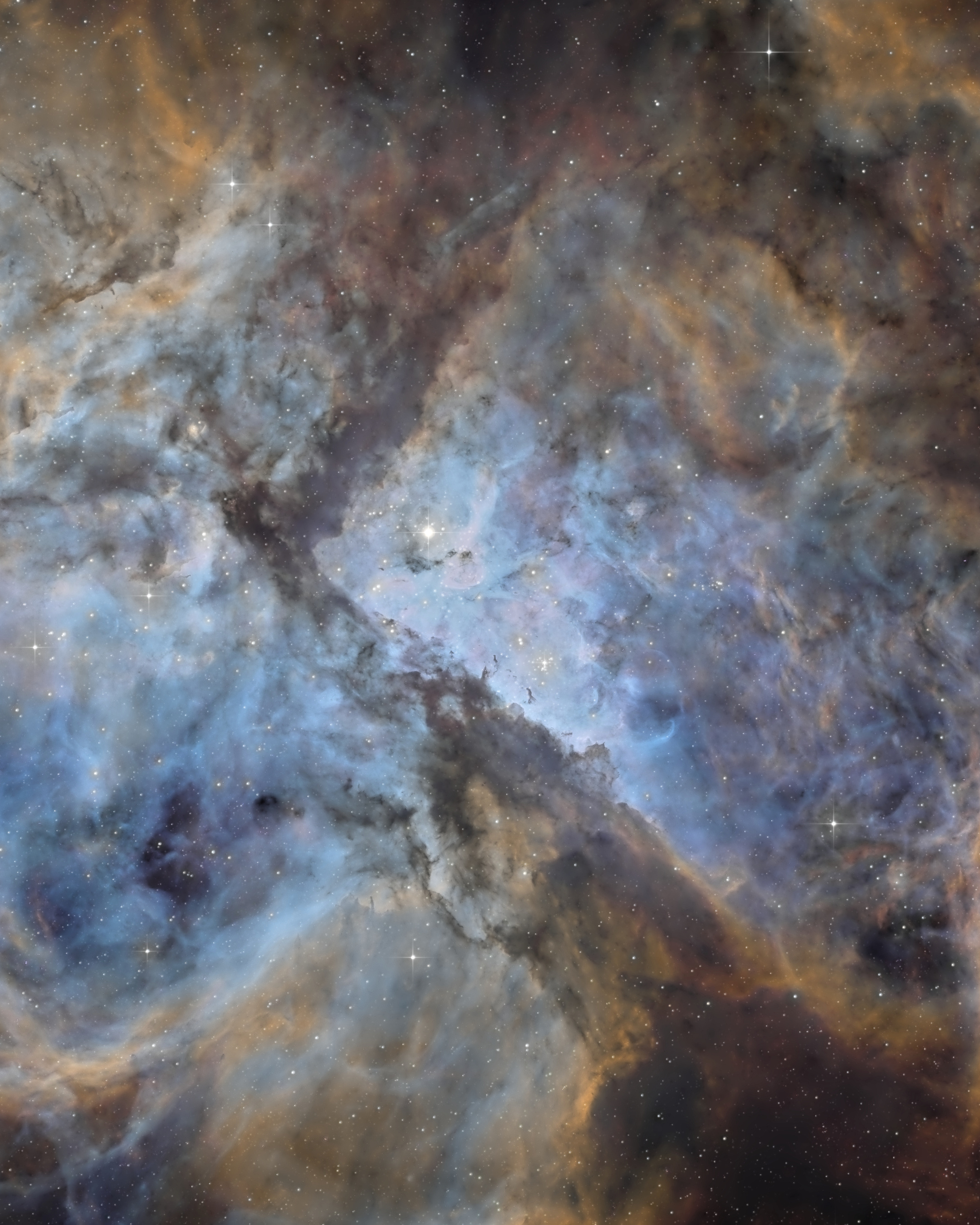
中心部:イータ・カリーナ、暗いちりの帯、キーホール、星団トランプラー14The heart: Eta Carinae, the dark dust lanes, the Keyhole and the cluster Trumpler 14
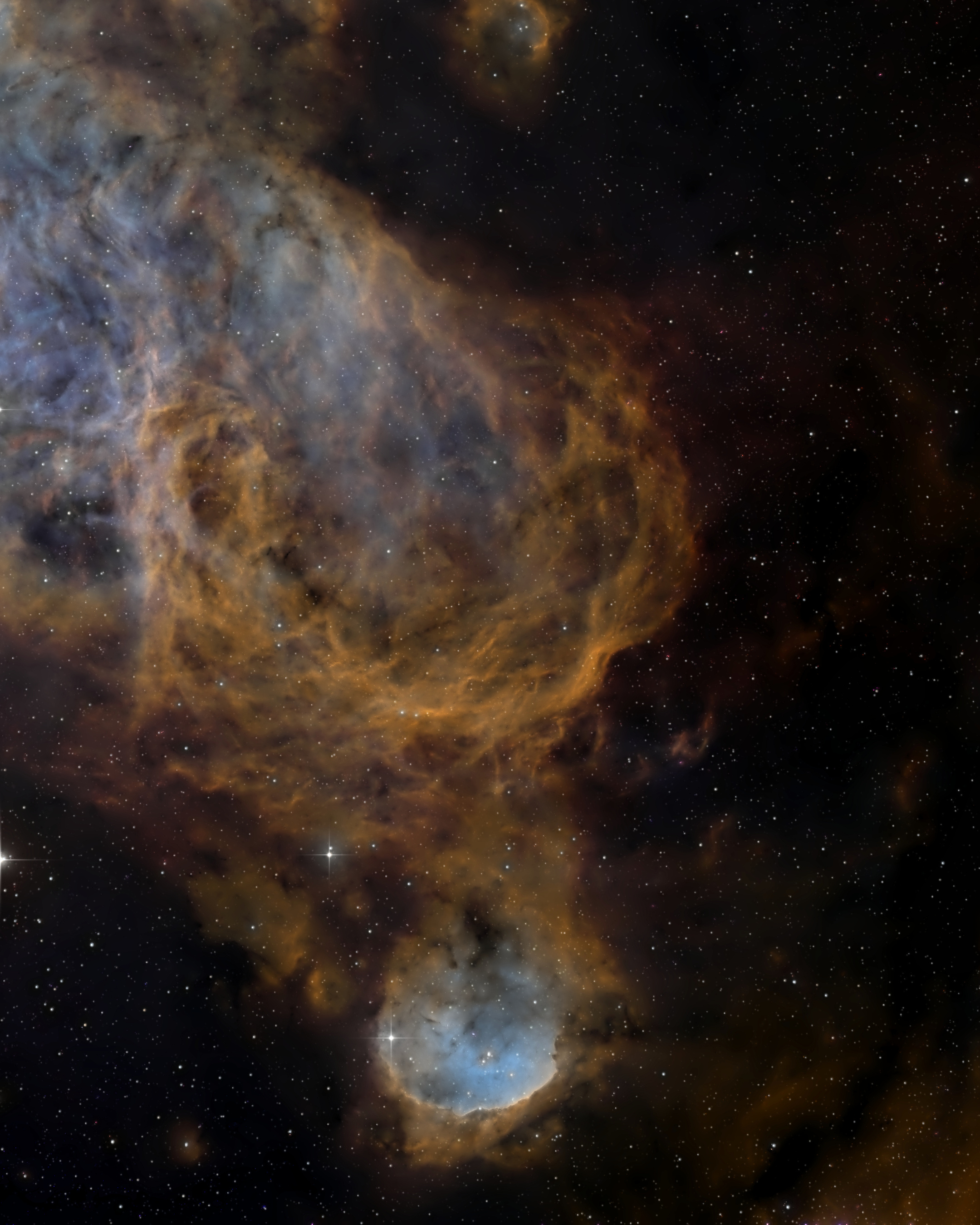
NGC 3324(縁にウェッブが撮影した「宇宙の断崖」がある星雲)と、そばに広がるガスの殻NGC 3324, whose rim includes Webb's "Cosmic Cliffs", and shells of glowing gas beside it
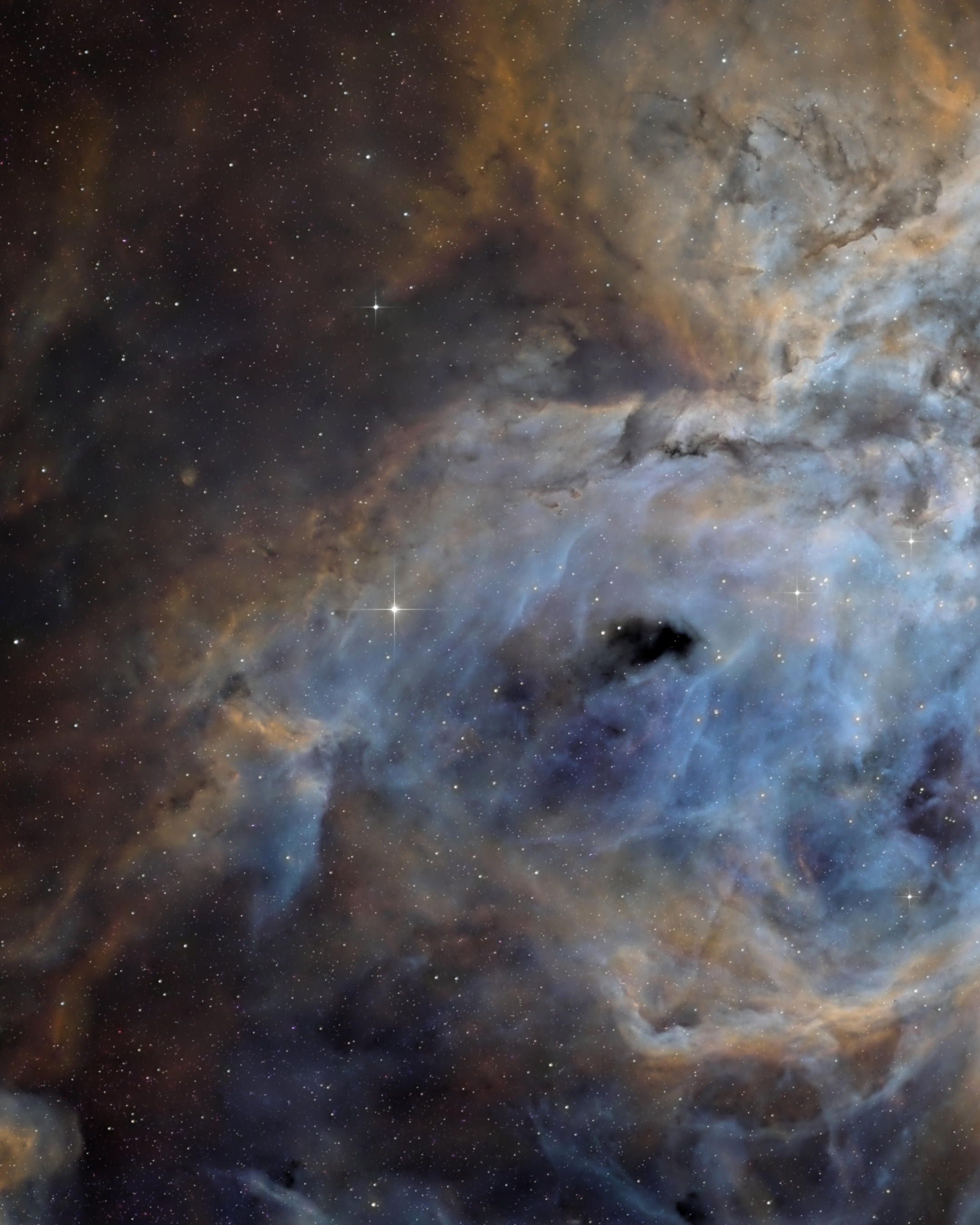
イータ・カリーナの南、酸素の多い青い領域に浮かぶ暗い雲Dark clouds in the blue, oxygen-rich region south of Eta Carinae
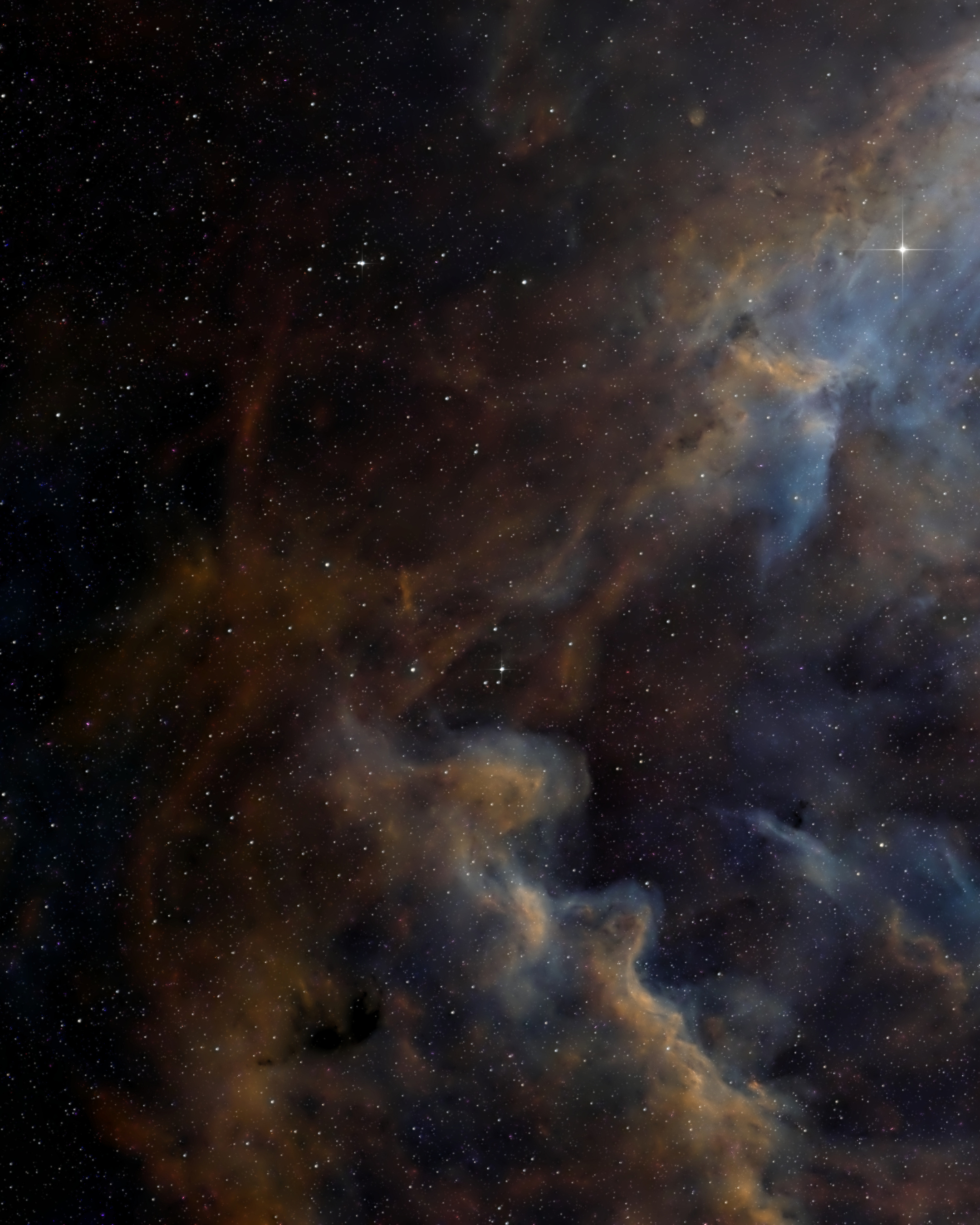
星雲の南の縁にうねる雲Billowing clouds at the nebula's southern edge
拡大画像は、より広い範囲を4/5に縮小したもので、局所的なコントラストを少し上げています。フル解像度の切り抜きは、上のフル解像度版からどうぞ。Close-ups show larger areas reduced to 4/5, with local contrast raised slightly. For full-resolution crops, use the full-resolution file above.
解説
カリーナ星雲(NGC 3372)は、南天のりゅうこつ座にある、天の川銀河でも最大級の明るい星形成領域で、距離は約7,500〜8,500光年です。中心付近では、不安定な大質量星イータ・カリーナ(りゅうこつ座η星)が星団トランプラー16の中に輝き、そのそばに暗い「キーホール(鍵穴)」の雲、近くに星団トランプラー14があります。光るガスを暗いちりの帯が横切っています。右下の端近くの丸い星雲はNGC 3324で、その縁にはウェッブ宇宙望遠鏡が撮影した「宇宙の断崖(Cosmic Cliffs)」があります。写野は3.6×2.4度(満月約7個分の幅)で、北は右です。
作り方
- 2026年1月4日(世界時)、ナミビアにあるリモート望遠鏡(タカハシ FSQ-106ED 屈折望遠鏡、口径106 mm、焦点距離530 mm、Moravian C3-61000 カメラ)で撮影。観測時間はSkyGemsから借りたものです
- ナローバンドフィルター:水素Hα 3分×10枚、酸素[O III] 5分×10枚、硫黄[S II] 5分×10枚(計2時間10分)。ぶれたテスト画像2枚は不使用
- 自作のPythonツールで位置合わせ・合成。位置はESAのGaia DR3カタログの15,551個の星と照合
- 星の形を測って一つずつ当てはめ、星とガスを分離。複数のスケールでノイズを低減し、信号の強い部分は測った星の形でデコンボリューション(ぼけの補正)
- ハッブル・パレット:硫黄を赤、水素を緑、酸素を青(波長の順)。水素は全体を緑にしてしまうため、緑を赤と青の平均までに抑え、水素の35%を赤で表示。水素の多いガスは銅色、高温の星の近くの酸素の多いガスは青になります
- 星はほぼ白で表示(狭いフィルターでは星の本当の色はわかりません)
注記
- 明るい24個の星の十字の光(回折スパイク)は画像処理で描き加えたものです。屈折望遠鏡ではスパイクは生じません。
- 肉眼で見える色ではありません。自然な色では、星雲は赤やピンクで、中心は青緑色です。
- Web版と5K版は、星の明るさのピークを保ちながらフル解像度版から縮小し、軽くシャープにしています。
- スパイク以外に、描き加え・削除・複製・AIによる生成はしていません。
About this image
The Carina Nebula (NGC 3372) is one of the largest and brightest star-forming regions in our galaxy, about 7,500–8,500 light-years away in the southern constellation Carina. Near its centre, the massive, unstable star Eta Carinae shines in the cluster Trumpler 16, with the dark Keyhole cloud beside it and the cluster Trumpler 14 nearby. Lanes of dust cut across the glowing gas. Near the lower right edge is NGC 3324, whose rim includes the "Cosmic Cliffs" imaged by the Webb telescope. The field is 3.6 × 2.4 degrees, about seven full Moons wide, with north to the right.
How it was made
- Taken remotely on 4 January 2026 (UT) with a Takahashi FSQ-106ED refractor in Namibia (106 mm aperture, 530 mm focal length, Moravian C3-61000 camera), on observing time rented from SkyGems
- Narrowband filters: hydrogen-alpha 10 × 3 min, oxygen [O III] 10 × 5 min, sulphur [S II] 10 × 5 min (2 h 10 min in all); two blurred test frames left out
- Aligned and stacked with my own Python tools; positions checked against 15,551 stars of ESA's Gaia DR3 catalogue
- Stars separated from the gas by fitting each one with the measured star shape; noise reduced at several scales; where the signal is strong, detail sharpened by deconvolution with the measured star shape
- Hubble palette: sulphur red, hydrogen green, oxygen blue (in order of wavelength). Hydrogen would turn everything green, so green is held to the average of red and blue and 35% of the hydrogen is shown in red: hydrogen-rich gas looks copper, oxygen-rich gas near the hottest stars blue
- Stars shown near-white: narrow filters say little about a star's true colour
Notes
- The four-pointed diffraction spikes on the 24 brightest stars are added in processing; a refractor makes none.
- These are not the colours the eye would see: in natural colour the nebula is red and pink with a teal centre.
- The web and 5K versions are reduced from the full picture keeping each star's peak, and lightly sharpened.
- Apart from the spikes, nothing was added, removed, cloned or generated with AI.
利用についてUse
報道・記事でのご利用は、上記のクレジットを表記いただければご自由にどうぞ。それ以外のご利用はご連絡ください(All rights reserved)。News and editorial use is welcome with the credit above. For any other use, please get in touch (all rights reserved).
X: @Sting1_JP · Flickr: photostream